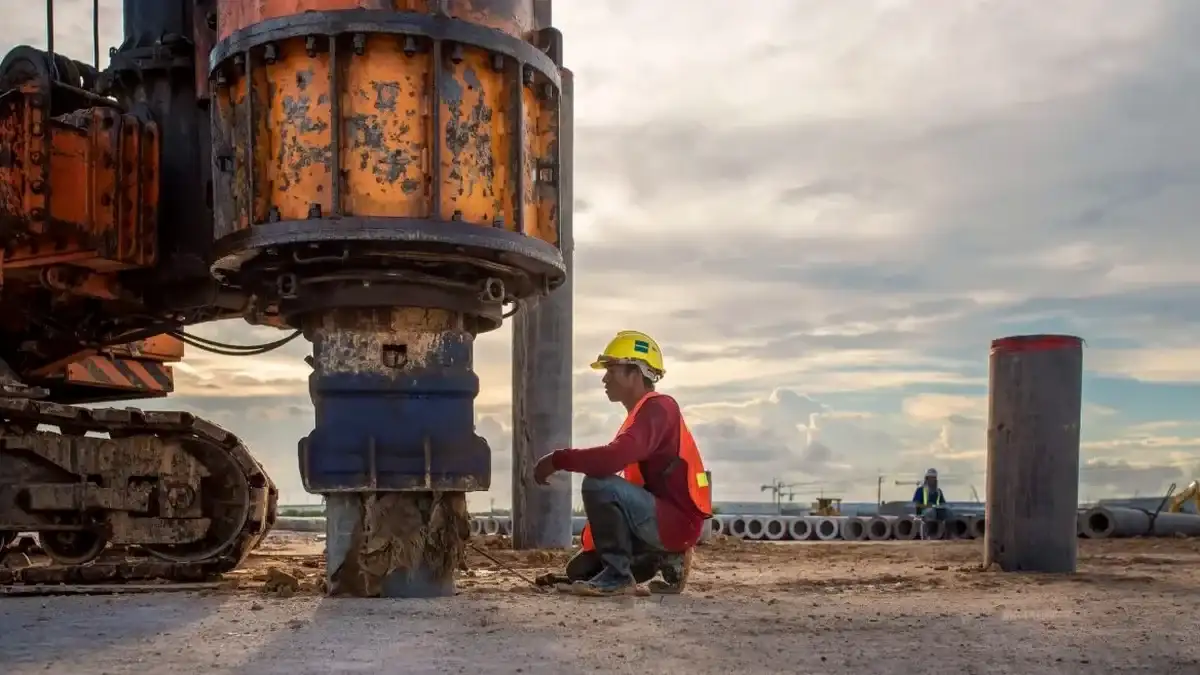
The Rouge River valley and the remnants of glacial Lake Iroquois left Pickering with a complex patchwork of loose sands, silty deposits, and man-made fill that shifts more than most engineers anticipate. When a site sits on 6 to 12 metres of hydraulically placed fill or outwash sand, differential settlement becomes a design problem long before the structural drawings are finalized. Vibrocompaction design addresses this directly by specifying probe spacing, energy levels, and verification testing that turn compressible granular soil into a dense, load-bearing stratum. Our work in Durham Region has shown that a well-calibrated vibrocompaction program, informed by CPT testing before and after treatment, eliminates the uncertainty that standard borehole data leaves behind. We deliver compaction specifications that match the actual grain-size distribution of the deposit, not a textbook idealization.
A vibrocompaction spec without CPT verification is just a drilling exercise: the soil tells you when it’s dense, not the rig operator.