GEOTECHNICALENGINEERING
PICKERING
HomeInvestigationCPT (Cone Penetration Test)

CPT Testing in Pickering: Accurate Stratigraphy Without Drilling

Sound ground. Sound decisions.

LEARN MORE

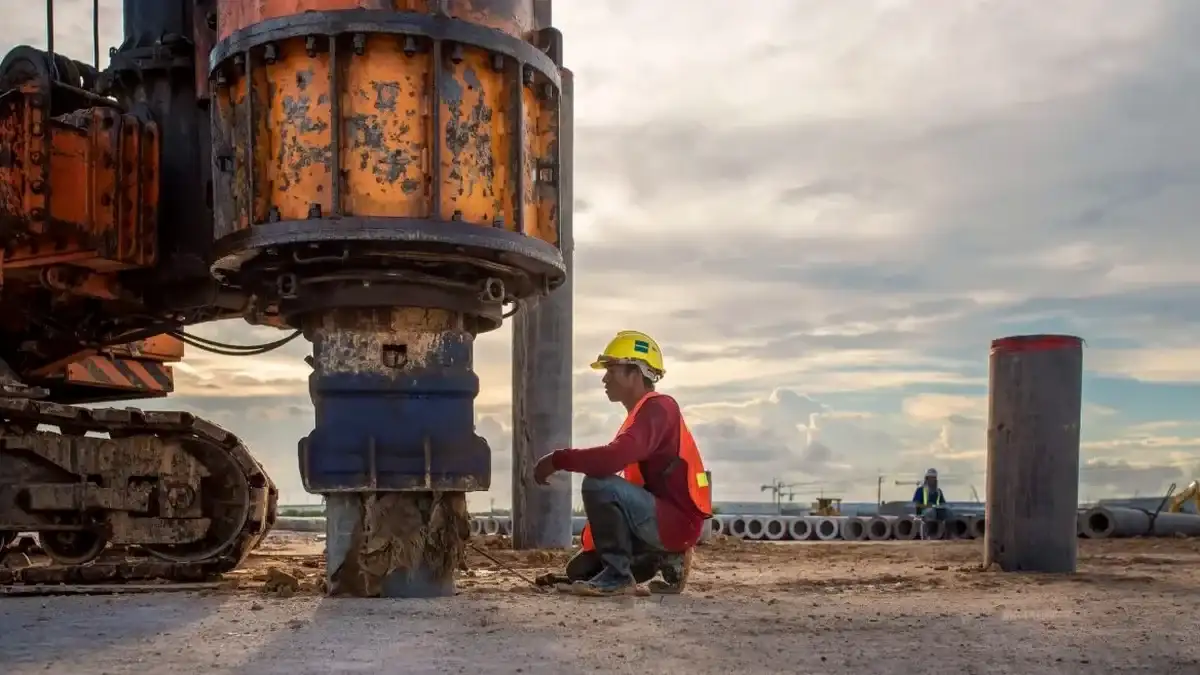
A foundation excavation near the Rouge River Valley hit an unexpected peat lens at four meters—soft organics that didn't appear on the desk study. The structural engineer halted the pour and called us to run a truck-mounted CPT push straight through the suspect zone. Within two hours, the cone profile mapped the exact extent of the compressible layer and confirmed competent glacial till at depth, letting the design team switch to a deeper bearing stratum without ordering a second round of boreholes. That's the practical reality of CPT work in Pickering: the contact between the Lake Iroquois sand plain and the underlying Halton Till creates stratigraphic surprises that standard SPT drilling can smear right past. Our 20-tonne rig works from Rosebank Road north to the Seaton development lands, delivering continuous tip resistance and sleeve friction data for projects that won't tolerate guesswork. When time on site costs money, a single-day CPT campaign often replaces a week of conventional drilling, and the digital log goes straight into the geotechnical report the same evening.

Continuous cone resistance and pore-pressure data let us distinguish dense sand from cemented till without ever pulling a sample—critical in Pickering's layered glacial deposits.
Our service areas

Our approach and scope

Pickering sits on a classic southern Ontario glacial sequence: a surficial sand cap over dense silt till, with occasional buried river channels filled with compressible clay. That layering makes CPT particularly effective here because the cone catches thin interbeds that split-spoon sampling misses. Our rig pushes a 60-degree conical tip at a constant 2 cm/s rate, measuring cone resistance, sleeve friction, and pore pressure simultaneously—three parameters that together classify soil type in real time without ever pulling a sample. For sites along the bluffs above Lake Ontario, we pair CPT with a slope stability assessment to verify that the interpreted shear-strength profile supports cut-and-fill designs near the crest. On commercial pads in the Brock Road corridor, a single CPT profile often replaces three or four boreholes for shallow foundation design, cutting the investigation budget by roughly forty percent while providing higher-resolution stratigraphy. Every test follows CSA A23.3 and the relevant sections of the Ontario Building Code, and we calibrate pore-pressure transducers each morning before mobilization to guarantee saturated response in the silty transition zones.
CPT Testing in Pickering: Accurate Stratigraphy Without Drilling
Technical reference — Pickering

Local geotechnical context

The most common mistake we see on Pickering projects is relying on SPT blow counts alone in transition zones between sands and tills. A spoon sampler can drive through a thin, sensitive clay layer and the driller won't feel it—but that same layer will show up clearly on the CPT friction ratio trace. Missed soft seams lead to differential settlement under strip footings, and retrofitting underpinning after the framing is up costs ten times what a proper investigation would have. Another local concern is the Duffin Creek floodplain, where post-glacial alluvium hides buried organics; static cone refusal at shallow depth is a useful warning sign that should trigger follow-up sampling. Our lab in Durham Region runs soil classification on any suspect material, and we cross-check CPT soil behavior type charts against physical samples whenever the friction ratio falls in the organic or sensitive-clay zone.

Need a geotechnical assessment?

Reply within 24h.

Email: info@geotechnicalengineering.co

Watch the video

Regulatory framework

ASTM D5778-20 (Standard Test Method for Electronic Friction Cone and Piezocone Penetration Testing of Soils), CSA A23.3-19 (Design of Concrete Structures — referenced for foundation bearing verification), Ontario Building Code 2012 (O. Reg. 332/12), Part 4 — Structural Design, NBCC 2020 — National Building Code of Canada, geotechnical provisions, MTO LS-805 (Ontario Ministry of Transportation method for CPT, where applicable for public infrastructure)

Typical values

ParameterTypical value
Cone tip capacity100 MPa (standard); 150 MPa available for dense till
Sleeve friction sensorStrain-gauge type, 1 MPa full-scale range
Pore pressure transducerSaturated, de-aired, 3.5 MPa range
Push rate20 mm/s ± 2 mm/s per ASTM D5778
Maximum depth (standard truck)25 m in overburden; deeper with pre-augering
Data acquisition interval25 mm depth increments
Friction ratio calculationAutomated, displayed real-time on cab monitor

Quick answers

How much does a CPT test cost in Pickering?

For a standard CPTu push to 15 metres on an accessible residential lot in Pickering, budget between CA$200 and CA$290 per metre. The total depends on depth, number of pushes, and whether you need seismic cone or dissipation testing. A typical single-family home investigation with two pushes runs around CA$2,500 to CA$4,000. We provide a fixed-price quote after reviewing your site address and foundation plan.

Do I still need boreholes if I'm using CPT?

In many Pickering sites on the sand plain, CPT can reduce the number of boreholes but not always eliminate them entirely. The cone gives continuous strength and stratigraphy data, but it doesn't retrieve physical samples for laboratory testing. We usually recommend at least one borehole or test pit to calibrate the CPT soil classification and to collect samples for moisture content and Atterberg limits, especially if the friction ratio indicates organic or sensitive soils.

Can a CPT rig access a standard residential backyard in Pickering?

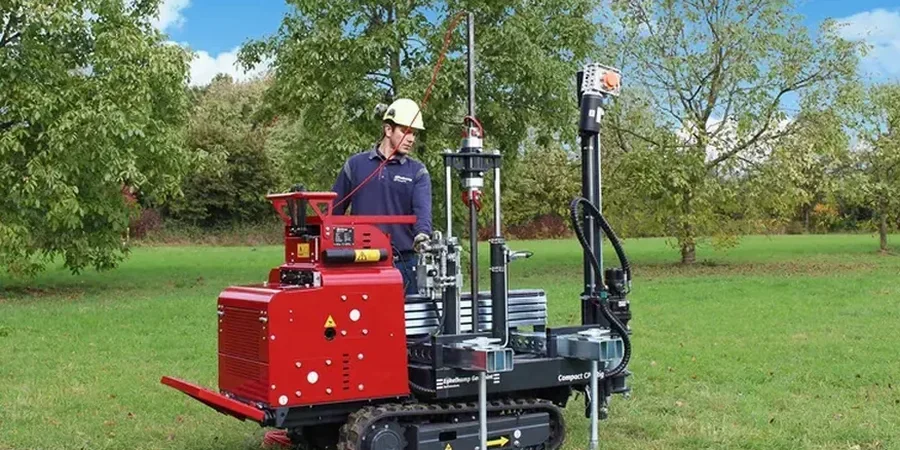
Our full-size truck needs about 3 metres of width and stable ground, which works for most driveways and side yards. For tighter backyards—common in older Bay Ridges lots with narrow side passages—we bring a tracked crawler CPT rig that fits through a 1.2-metre gate and exerts low ground pressure on lawns. We'll assess access during the quote stage; there's rarely a Pickering lot we can't reach with one of the two rigs.

How long does CPT testing take on site?

A single push to 15 metres takes roughly 30 minutes of penetration time once the rig is set up. With mobilization, cone calibration, and data backup, two pushes on a residential lot usually wrap up in half a day. For commercial sites requiring five or more pushes on a grid, expect one full day on site. We email the digital logs within 24 hours of demobilization.

Location and service area

We serve projects in Pickering and surrounding areas. More info.

View larger map