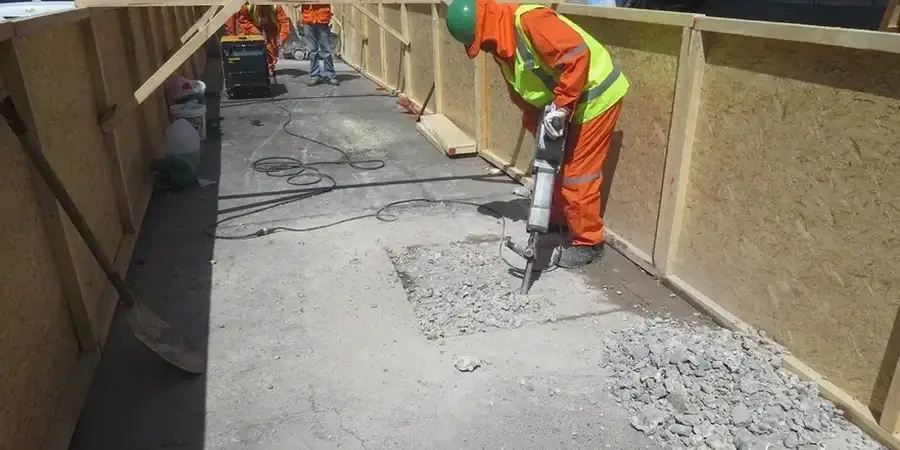
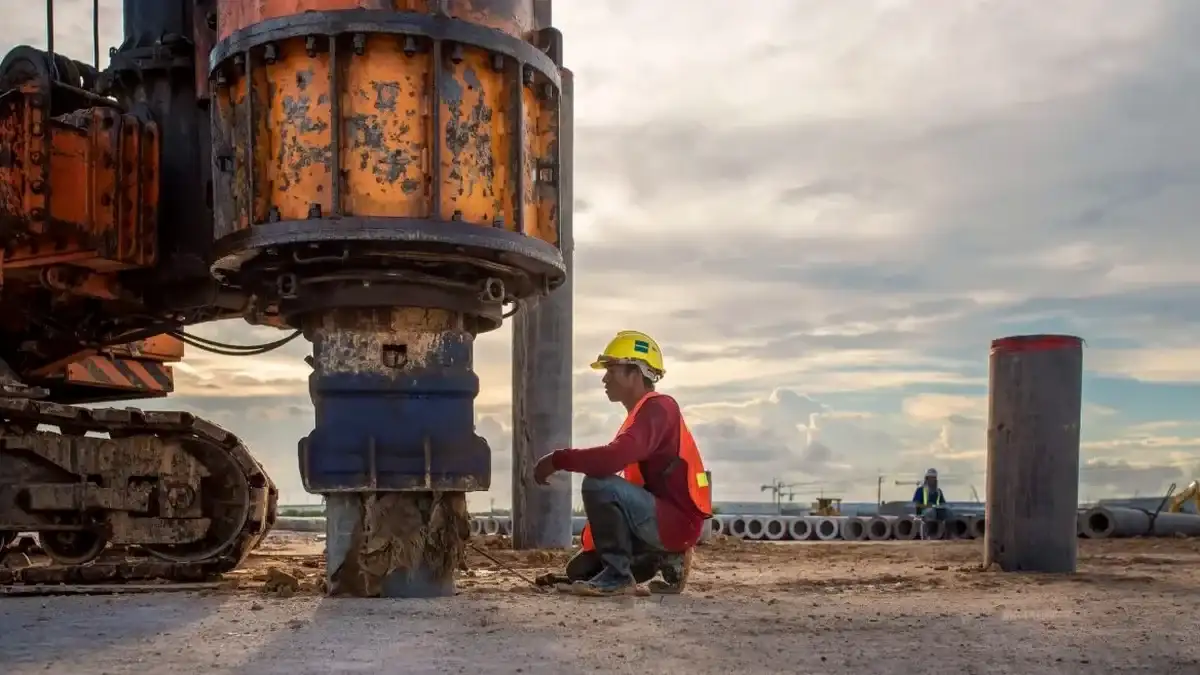
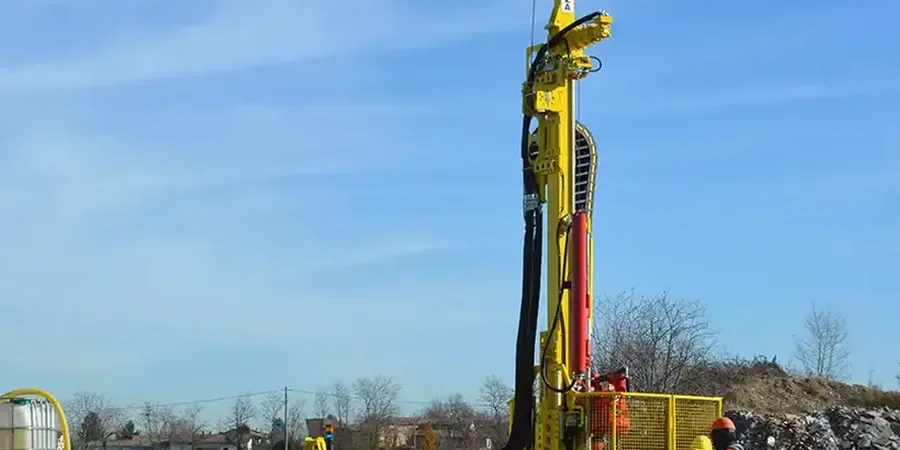
Pickering's subsurface is a legacy of the last glaciation—dense Halton Till overlying stratified sand and silt, with occasional pockets of soft Lake Iroquois clay near the waterfront. N-values can swing from refusal on boulder-rich till to single digits in saturated silty zones, and groundwater often sits within 3 meters of grade across the Duffin Creek floodplain. A properly executed standard penetration test cuts through guesswork: it quantifies the relative density of granular layers and the consistency of cohesive strata in a single borehole run. Our lab team runs the SPT hammer system calibrated to ASTM D1586, recording incremental blow counts every 150 mm so you can correlate directly to bearing capacity, liquefaction potential under the NBCC seismic provisions, and settlement estimates for shallow footings. When site access is tight near the Pickering Town Centre or residential redevelopments along Glenanna Road, we mobilize compact track-mounted rigs that handle the till without tearing up landscaping. For a complete stratigraphic profile before deep foundation design, many projects combine the SPT campaign with a CPT test to capture continuous tip resistance and pore pressure data in the softer silt seams that the split-spoon sampler can disturb.
N-value alone is a parameter; N-value plus geology is a diagnosis. In Pickering's glacial terrain, that distinction determines whether your foundation gets overdesigned or under-scrutinized.