GEOTECHNICALENGINEERING
PICKERING
HomeSlopes & WallsRetaining wall design

Retaining Wall Design for Pickering’s Glacial Terrain and Fill Zones

Sound ground. Sound decisions.

LEARN MORE

In Pickering, many residential and commercial developments sit atop the former Lake Iroquois shoreline deposits—layered silts, sands, and clays that complicate retaining wall design from the outset. A wall built near the Rouge River valley or along the steep grades of the Duffins Creek corridor has to contend with more than just lateral earth pressure; groundwater perched within sand lenses can double the load on a structure if not identified during the subsurface investigation. The local practice here requires an integrated approach where the retaining wall design is informed by a detailed geotechnical model, not a generic assumption about soil behavior. Our team coordinates directly with drilling crews to recover undisturbed Shelby tube samples, and the resulting strength parameters feed directly into wall geometry checks for overturning, sliding, and bearing capacity under NBCC 2020 seismic combinations. A well-resolved retaining wall design in Pickering also accounts for frost penetration depth, which routinely reaches 1.2 metres in this part of Durham Region, affecting backfill material selection and drainage detailing behind the stem.

A retaining wall in Pickering is only as reliable as the geotechnical investigation that defines the groundwater profile behind it.
Our service areas

Our approach and scope

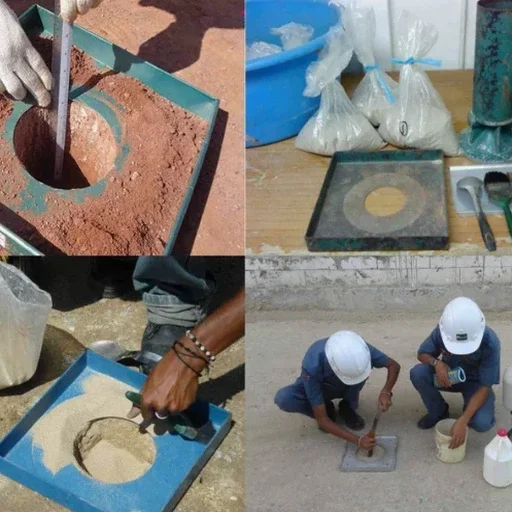
A common misstep we observe in Pickering is specifying a cantilever retaining wall without verifying the actual friction angle of the compacted fill behind it. Contractors sometimes assume a granular borrow will behave like a standard Ontario Class B fill, but the silty sand sourced from local pits near Greenwood often carries enough fines to reduce the effective phi angle by several degrees once saturated. That difference cascades into a lower factor of safety against sliding, particularly when the wall retains a cut on properties sloping toward Lake Ontario. Our retaining wall design process includes laboratory direct shear testing on the proposed backfill, which feeds into a Rankine or Coulomb analysis specific to the wall batter and backslope geometry. For taller walls exceeding 3 metres, we run supplemental slope stability analyses that consider the global failure surface passing beneath the wall foundation—a scenario that single-wedge stability checks miss entirely. Drainage design is equally critical: we specify continuous perforated toe drains, filter fabric gradation curves matched to the retained soil, and weir outlets that discharge to municipal storm sewers where possible. Every retaining wall design we deliver for Pickering projects includes a construction-phase monitoring schedule to verify that the as-built conditions align with the geotechnical baseline report.
Retaining Wall Design for Pickering’s Glacial Terrain and Fill Zones
Technical reference — Pickering

Local geotechnical context

The Halton Till underlying much of Pickering is a dense, overconsolidated diamict that provides excellent bearing, but the overlying glaciolacustrine silts and clays of the Lake Iroquois plain tell a different story. These fine-grained soils are prone to softening and strength loss when exposed to prolonged wetting, which is a real concern for any retaining wall built near the waterfront communities along Frenchman’s Bay or along the Petticoat Creek corridor. Slope creep in these deposits can impose unexpected lateral loads on walls over time, even when the original design considered only active earth pressure. Additionally, Pickering sits within a moderate seismic hazard zone; the NBCC 2020 uniform hazard spectrum for the site includes short-period accelerations that must be combined with the soil-structure interaction model. We have seen cases where a wall designed only for static conditions showed marginal factors of safety once the seismic earth pressure increment (calculated using the Mononobe-Okabe method) was applied. The risk of differential settlement is also elevated where the wall foundation straddles a transition between cut and fill, a situation common on the sloping lots of the Brock Road corridor. A retaining wall design that ignores these transitions can crack within the first freeze-thaw cycle.

Need a geotechnical assessment?

Reply within 24h.

Email: info@geotechnicalengineering.co

Regulatory framework

NBCC 2020 – National Building Code of Canada, Part 4, CSA A23.3-19 – Design of Concrete Structures, Ontario Building Code (OBC) – Supplementary Standard SB-1, Climatic and Seismic Data, Canadian Foundation Engineering Manual (CFEM), 4th Edition, ASTM D3080 – Direct Shear Test of Soils Under Consolidated Drained Conditions (for backfill characterization)

Typical values

ParameterTypical value
Design standard for structural concreteCSA A23.3-19
Seismic load combinationsNBCC 2020, Site Class C or D per OBC
Minimum factor of safety – sliding1.5 (static), 1.1 (seismic)
Minimum factor of safety – overturning2.0 (static), 1.2 (seismic)
Backfill internal friction angle (typical local granular)32°–36° (compacted, drained)
Allowable bearing pressure for medium dense till150–250 kPa (spread footing)
Frost penetration depth (Durham Region)1.2 m below finished grade
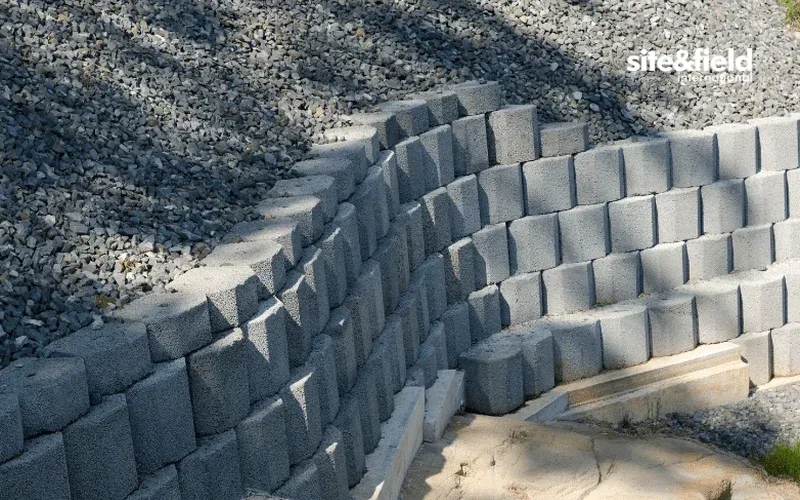
Typical wall types designedCantilever, gravity, segmental block (MSE), gabion

Quick answers

What does a retaining wall design package typically cost for a residential lot in Pickering?

For a typical single-family residential retaining wall in Pickering—ranging from 1.2 m to 3.0 m in height—the combined geotechnical investigation and structural design package generally falls between CA$1.280 and CA$5.410, depending on the number of boreholes required and the wall length. Taller walls, walls requiring tieback anchors, or sites with challenging access near creeks add to the scope and cost.

How long does the design process take from site visit to stamped drawings?

A standard timeline in Pickering runs three to four weeks after the field work is complete: one week for laboratory testing of the recovered samples, one week for geotechnical analysis and parameter selection, and one to two weeks for the structural design and drawing preparation. Sites that require additional permitting through the Toronto and Region Conservation Authority (TRCA) may extend the schedule slightly.

Do you handle the permit submission with the City of Pickering?

Yes, we prepare the sealed engineering drawings and geotechnical report that form part of the building permit application. The City of Pickering typically requires a Schedule C geotechnical report for retaining walls over 1.0 m in height, and our documentation is structured to meet that requirement directly. We also coordinate with TRCA if the wall falls within a regulated area.

Location and service area

We serve projects in Pickering and surrounding areas. More info.

View larger map