GEOTECHNICALENGINEERING
PICKERING
HomeGround improvementStone column design

Stone Column Design in Pickering — Ground Improvement for Weak Soils

Sound ground. Sound decisions.

LEARN MORE

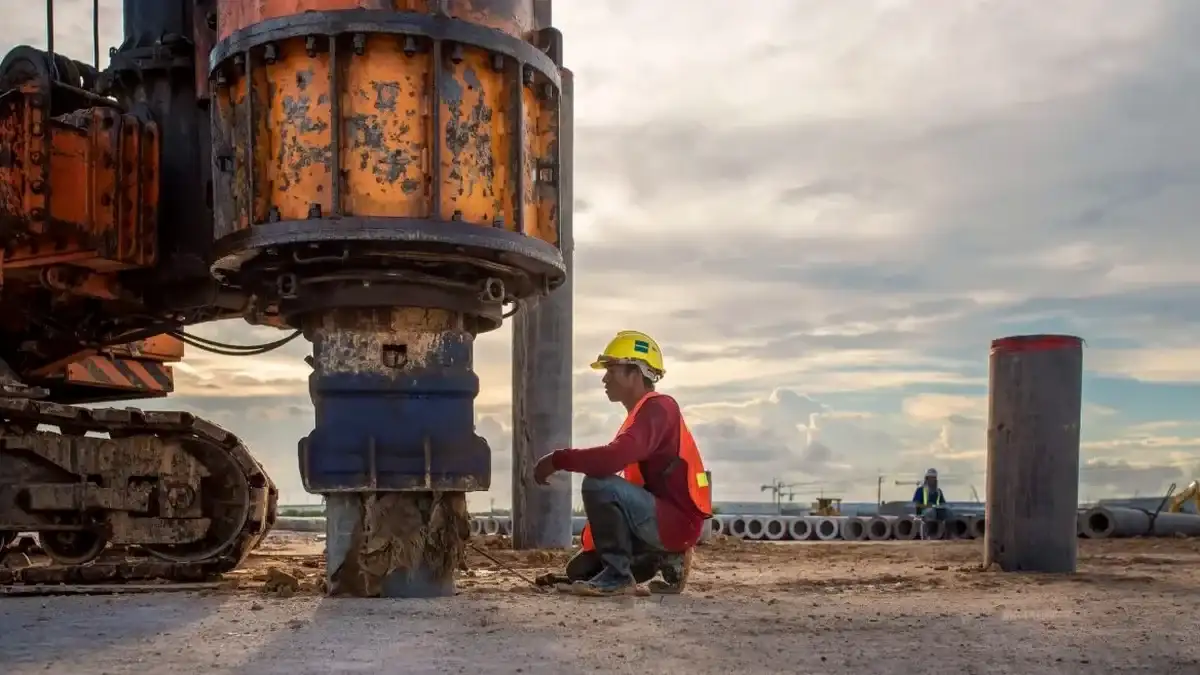
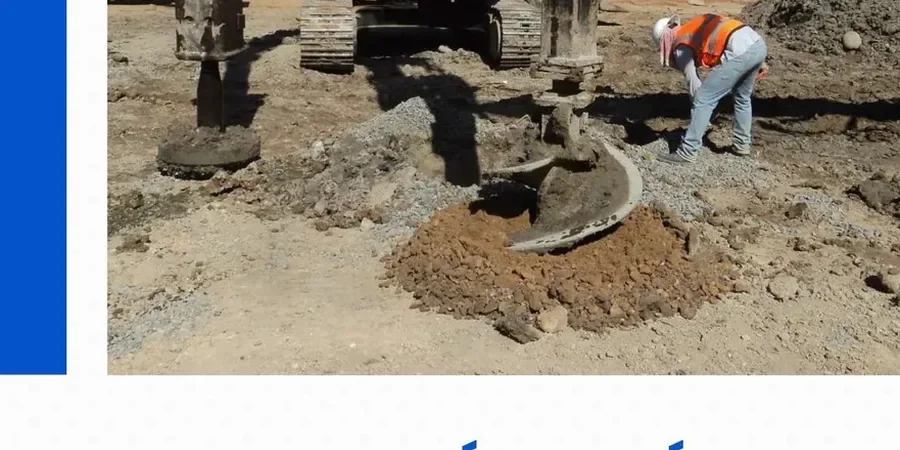
Vibroflot rigs are a common sight in Pickering these days, especially near the Duffins Creek corridor where the alluvial clays run deep. The machine works by penetrating a vibrating probe into the ground to depth, feeding stone through the annulus, and compacting it in lifts. What you get is a stiffened composite mass — the stone column — that drains, densifies, and reinforces the native soil all at once. We run the design through settlement tolerance checks first because the organic silts here consolidate unevenly under load. For projects near the 401 extension or the new Seaton community, we often pair the stone column layout with a CPT test campaign to verify the undrained shear strength profile before finalizing the grid spacing and column diameter.

A well-designed stone column grid in Pickering's soft clays can double the bearing capacity while cutting post-construction settlement by half.
Our service areas

Our approach and scope

Pickering sits at about 217 meters above sea level, perched on the South Slope of the Oak Ridges Moraine. That elevation drop toward Lake Ontario means the overburden soils change fast — dense till near the ridge, soft glaciolacustrine clays down in the floodplain. A standard stone column design in the lower reaches typically targets an area replacement ratio between 15% and 35%, depending on whether we are supporting a slab-on-grade warehouse or a mid-rise residential block. The load transfer mechanism relies on the lateral confinement provided by the native clay once the column is installed. In practice, we have seen modulus improvement factors of 2.5 to 3.5 in the Duffin Heights area when using 800 mm diameter columns on a triangular grid, backfilled with crushed limestone meeting OPSS 1004 gradation requirements.
Stone Column Design in Pickering — Ground Improvement for Weak Soils
Technical reference — Pickering

Local geotechnical context

A warehouse project near the Frenchman's Bay area got into trouble a few years back. The original spec called for shallow footings on compacted fill, but the underlying silty clay had a tip resistance under 0.6 MPa in the top four meters. After the first rainy autumn, the slab showed differential settlement exceeding 40 mm in the central bays. We got brought in to retrofit with stone columns — wet top feed method, 700 mm diameter, 6.5 m deep, spaced at 1.8 m centers. The tricky part was maintaining column continuity through the crusty desiccated layer at surface while not losing stone in the soft zone below. That project taught us to always run a preliminary pore pressure dissipation check when the groundwater table sits within two meters of grade. Ignoring the seasonal water level fluctuation in Pickering is a fast track to underperformance.

Need a geotechnical assessment?

Reply within 24h.

Email: info@geotechnicalengineering.co

Regulatory framework

NBCC 2020 (National Building Code of Canada), CSA A23.3:19 (Design of Concrete Structures), OPSS 1004 (Aggregates — granular materials), ASTM D5878 (Standard Guide for Ground Improvement Using Stone Columns)

Typical values

ParameterTypical value
Typical column diameter600 - 900 mm
Area replacement ratio15 - 35%
Grid patternTriangular (default) or square
Backfill materialCrushed limestone, 25-50 mm (OPSS 1004)
Target SPT N-value after treatment>15 blows/300 mm between columns
Settlement reduction factor2.0 - 3.5 (depending on ratio)
Minimum treatment depth0.5 m into competent bearing stratum

Quick answers

What is the typical cost range for stone column design in Pickering?

For a full design package — including site characterization, analytical modeling, and construction-phase QA/QC — the fee typically falls between CA$2,200 and CA$6,870 depending on the treated area and the complexity of the soil profile. A simple warehouse pad on uniform clay sits at the lower end; a multi-level structure near the creek with variable fill requires more analysis and falls higher.

How deep do stone columns need to go in Pickering's soils?

It depends entirely on where the competent bearing layer sits. In the Duffins Creek floodplain, we often see soft clays extending 6 to 9 meters before hitting dense till or shale bedrock. The column must penetrate at least 0.5 meters into that firm stratum to transfer load effectively and prevent punching failure at the toe.

Which installation method works best for the silty clays around Frenchman's Bay?

The wet top feed method generally performs better in the saturated silty clays near the lake. The water flush keeps the hole open during penetration and helps the stone reach the bottom without bridging. Dry bottom feed can work in the drier upland areas near the moraine, but we do not recommend it where the groundwater table is within two meters of the surface.

Location and service area

We serve projects in Pickering and surrounding areas.

View larger map