GEOTECHNICALENGINEERING
PICKERING
HomeLaboratoryGrain size analysis (sieve + hydrometer)

Grain Size Analysis in Pickering: Sieve + Hydrometer Testing for Accurate Soil Classification

Sound ground. Sound decisions.

LEARN MORE

We have seen it happen on Pickering jobsites more than once: a contractor assumes a sandy fill is clean, only to have a retaining wall weep hole clog within months because fines were never quantified. That is what a proper grain size analysis prevents. The sieve and hydrometer combination is not just a lab routine; it is the foundation for drainage design, frost heave assessment, and compaction control across the city's glacial till and Lake Ontario shoreline deposits. When groundwater is high near Frenchman's Bay, the proportion of silt versus clay controls permeability—and the wrong assumption can stall a project for weeks. Before a shovel breaks ground on any excavation deeper than 1.2 metres, we recommend coupling this test with a trial pit investigation to verify stratigraphy visually, and then following up with Atterberg limits when the fines content exceeds 12 percent.

A grain size curve without a hydrometer is like a weather forecast without humidity—you are missing the variable that controls frost heave and drainage.
Our service areas

Our approach and scope

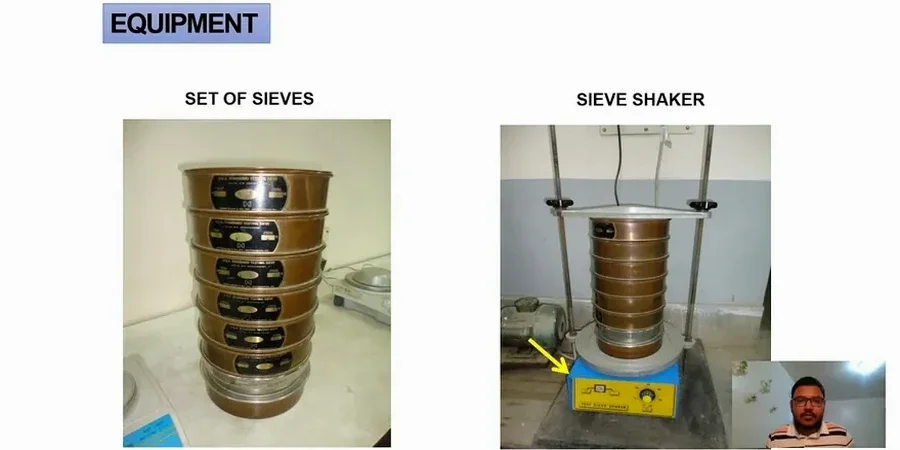
Pickering grew in distinct phases—the historic village core near the waterfront, the post-war subdivisions spreading north toward the moraine, and the newer Seaton development pushing infrastructure onto compacted glacial sediments. Each phase left behind a different set of fill materials, and knowing which era a site belongs to tells us what to expect before the first sample jar is opened. Grain size analysis in this context becomes a forensic tool: well-graded sand with angular gravel typically points to undisturbed till, while uniform fine sand with shell fragments suggests a former shoreline deposit that may liquefy under seismic loading. Our hydrometer procedure follows ASTM D422 for the sedimentation portion and ASTM C136 for mechanical sieving, running the full stack from 4.75 mm down to the 0.075 mm sieve before the hydrometer takes over. The resulting particle-size distribution curve is the single most referenced graph in any Pickering foundation report—it dictates whether a site needs imported granular fill, what filter fabric specification applies, and how to design the drainage layer under a raft foundation slab. We also use it to verify contractor-submitted borrow source samples against the project specification, catching gradation mismatches before they become compaction disputes.
Grain Size Analysis in Pickering: Sieve + Hydrometer Testing for Accurate Soil Classification
Technical reference — Pickering

Local geotechnical context

A seven-storey residential building on Kingston Road taught us a costly lesson about skipping hydrometer analysis. The geotechnical report had classified the foundation soil as silty sand based solely on sieve data, but the hydrometer later revealed a 22 percent clay fraction with moderate plasticity. During the spring thaw, differential heave cracked three grade beams before the structure was even topped out. Pickering's climate—with an average of 115 freeze-thaw cycles per year according to Environment Canada records for the Durham Region—makes frost susceptibility classification a non-negotiable step. When a grain size curve shows more than 10 percent passing the 0.02 mm sieve, we flag it for supplemental testing immediately. The Ontario Building Code references these thresholds indirectly through its reliance on the Canadian Foundation Engineering Manual, and our lab reports always cross-reference the Unified Soil Classification System (USCS) symbol so contractors can match it to their structural drawings without ambiguity. For deep foundations near the bluffs overlooking Lake Ontario, we often pair grain size data with SPT drilling to correlate particle distribution with standard penetration resistance, producing a profile that satisfies both the geotechnical engineer and the structural reviewer at the municipality.

Need a geotechnical assessment?

Reply within 24h.

Email: info@geotechnicalengineering.co

Regulatory framework

ASTM D422 – Standard Test Method for Particle-Size Analysis of Soils (hydrometer portion), ASTM C136 – Standard Test Method for Sieve Analysis of Fine and Coarse Aggregates, ASTM D2487 – Standard Practice for Classification of Soils for Engineering Purposes (Unified Soil Classification System), Canadian Foundation Engineering Manual (CFEM) – referenced by Ontario Building Code for frost susceptibility criteria

Typical values

ParameterTypical value
Sieve range (coarse fraction)75 mm to 4.75 mm (ASTM C136)
Sieve range (fine fraction)4.75 mm to 0.075 mm (ASTM C136)
Hydrometer range0.075 mm to 0.001 mm (ASTM D422)
Standard sample mass500 g for predominantly sand; 200 g for silt/clay
Dispersing agentSodium hexametaphosphate solution (40 g/L)
Hydrometer typeASTM 152H, calibrated at 20°C with meniscus correction
Reported coefficientsCu (uniformity), Cc (curvature), D10, D30, D60

Quick answers

What is the typical cost for a combined sieve and hydrometer test in Pickering?

For a single sample processed through the full sieve stack plus hydrometer sedimentation, the cost ranges from CA$120 to CA$280 depending on whether the material is predominantly sand or contains a high clay fraction that requires extended sedimentation readings. Volume pricing applies for projects submitting five or more samples at once, which is common on subdivision earthworks contracts across north Pickering.

When does the Ontario Building Code require a hydrometer analysis instead of just a sieve test?

The Ontario Building Code, through its reference to the Canadian Foundation Engineering Manual, effectively requires hydrometer analysis whenever the fines content—particles passing the 0.075 mm sieve—exceeds 12 percent by mass. This threshold is critical for frost heave classification: soils with more than 10 percent finer than 0.02 mm by hydrometer are considered frost-susceptible and may require deeper footings or subgrade replacement in Pickering's climate zone.

How long does a grain size analysis take from sample drop-off to report?

A standard combined sieve and hydrometer analysis takes 48 hours in our Pickering lab. The hydrometer portion requires a minimum 24-hour sedimentation period for the clay fraction to settle properly—this cannot be rushed without compromising accuracy. For urgent cases, such as a ready-mix pour that needs aggregate gradation approval, we offer same-day sieve-only reporting if the sample arrives before 10:00 AM.

What sample size do you need for a reliable particle-size distribution test?

We require approximately 2 kilograms of material for a standard combined analysis, collected in a sealed plastic bag to preserve natural moisture. For gravelly soils, the sample should be larger—around 5 kilograms—so we have enough coarse fraction to run the full 75 mm through 4.75 mm sieve stack without bias. Samples taken from test pits or SPT split spoons are both acceptable, provided the bag is labelled with the project name, borehole number, and depth interval.

Which USCS soil groups can be reliably identified using only sieve data without a hydrometer?

Sieve-only data can reliably classify clean gravels (GW, GP) and clean sands (SW, SP) where the fines content is visually confirmed to be below 5 percent. Once the percent passing the 0.075 mm sieve exceeds that threshold, the distinction between silty sand (SM), clayey sand (SC), and borderline silt (ML) becomes ambiguous without hydrometer data. In Pickering's glacial deposits, we frequently encounter sand with 8 to 15 percent fines that looks clean in the field but plots as SC after hydrometer testing—a difference that changes the allowable bearing pressure and the drainage design assumptions.

Location and service area

We serve projects in Pickering and surrounding areas.

View larger map