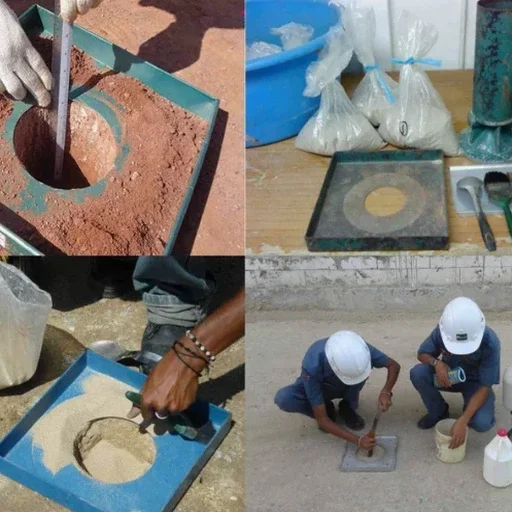
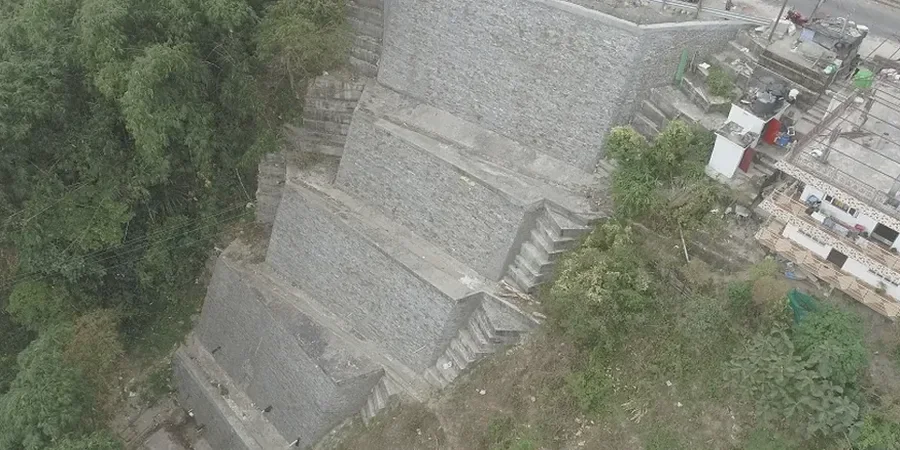
Pickering's topography is defined by the post-glacial landscape where the Duffins Creek and Petticoat Creek valleys have carved deep ravines into the Halton Till plain, leaving behind slopes that exceed 25 meters in relief in some sections near the Lake Ontario shoreline. The interplay between the dense, silty clay matrix of the till and the underlying weathered shale of the Georgian Bay Formation creates a classic two-layer system that governs pore pressure distribution during the spring thaw. In our laboratory, we run consolidated-undrained triaxial tests on Shelby tube samples from these specific strata to feed into limit equilibrium models, because generic parameters simply do not capture the brittleness of the upper till when it's saturated. For excavations near the waterfront, we often pair this with a seismic refraction survey to map the bedrock troughs where groundwater collects and reduces the factor of safety below the NBCC minimum of 1.5 for permanent slopes.
A Pickering slope standing at 2H:1V in Halton Till is a different engineering problem in April than it is in August, and our analysis accounts for that seasonal pore pressure cycle explicitly.